
The Mayan Mud Bath Rio Lagartos: Miracle or Myth?
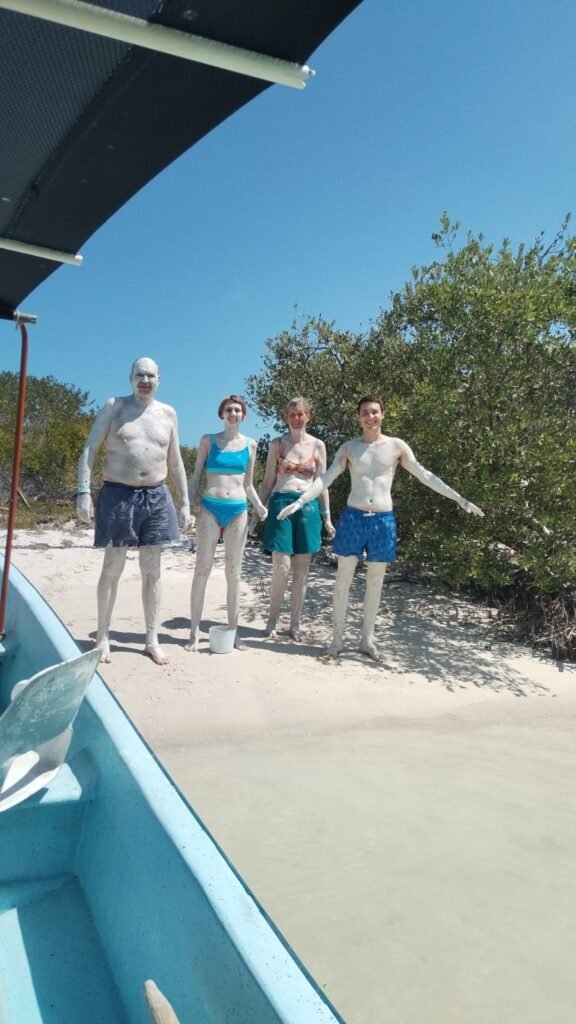
If you’ve ever looked up tours in the beautiful Río Lagartos Biosphere Reserve, you’ve probably seen the photos: travelers completely covered in a pale gray mud, smiling like living statues under the sun.
It’s one of the most iconic experiences in the region and often called the “Mayan Mud Bath Rio Lagartos.”
But many travelers ask the same question:
Is it actually good for your skin, or is it just a fun photo opportunity?
The short answer:
Yes, it does have real benefits , and science helps explain why.
The mineral-rich clay found in this coastal lagoon has properties similar to therapeutic muds used in spas around the world. While it’s not a miracle cure, it can provide natural skin benefits thanks to its unique composition and environment.
Let’s explore what really happens when you cover your skin with this famous lagoon mud.
A Natural Skin Reset: Gentle Exfoliation
The mud found near the salt flats of Río Lagartos has a very fine, silky texture.
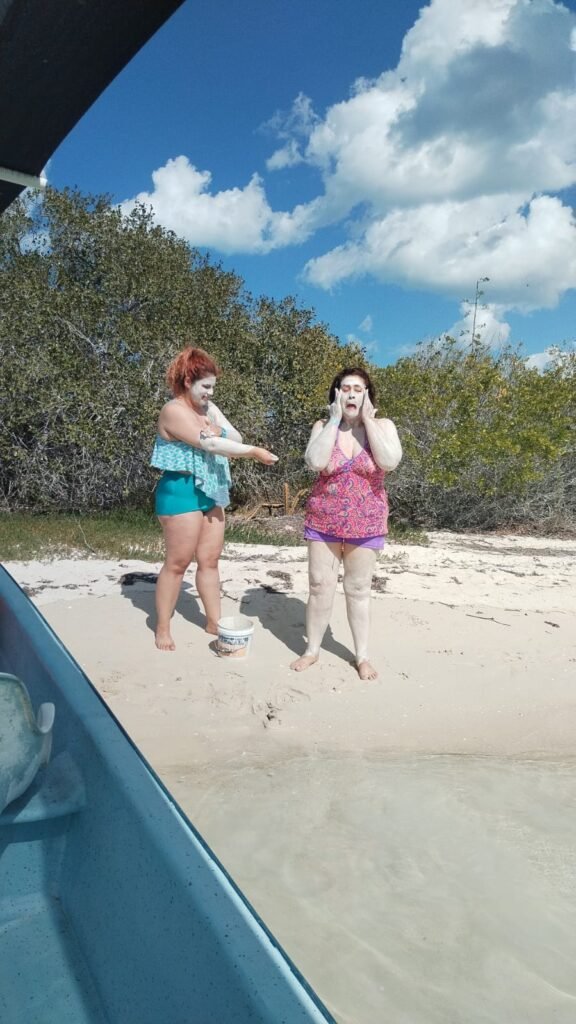
When gently applied and rubbed onto the skin, it acts like a natural exfoliating scrub.
This process removes dead skin cells that accumulate from:
- sunscreen
- sweat
- saltwater
- environmental exposure during travel
By removing this outer layer, the skin surface becomes smoother and cleaner.
Dermatologists refer to this process as mechanical exfoliation, similar to what happens when using facial scrubs or clay masks in skincare products.
The result is often immediate:
your skin feels softer, fresher, and cleaner once the mud is rinsed off.
Many visitors describe the sensation as a “skin reset.”
The mud found near the salt flats of Río Lagartos has a very fine, silky texture.
When gently applied and rubbed onto the skin, it acts like a natural exfoliating scrub.
This process removes dead skin cells that accumulate from:
- sunscreen
- sweat
- saltwater
- environmental exposure during travel
By removing this outer layer, the skin surface becomes smoother and cleaner.
Dermatologists refer to this process as mechanical exfoliation, similar to what happens when using facial scrubs or clay masks in skincare products.
The result is often immediate:
your skin feels softer, fresher, and cleaner once the mud is rinsed off.
Many visitors describe the sensation as a “skin reset.”
The mud in this lagoon is not ordinary soil.
Because the area is part of a hypersaline coastal ecosystem, minerals accumulate in the sediment over time. The mud contains naturally occurring elements such as:
- Sulfur
- Magnesium
- Potassium
- Trace marine minerals
Among these, sulfur is particularly interesting.
In dermatology, sulfur has long been used for its antibacterial and keratolytic properties, meaning it helps:
- cleanse pores
- reduce bacteria on the skin
- regulate excess oil
- soothe minor irritation
That’s why sulfur appears in many dermatological treatments for conditions like acne or oily skin.
Think of it as nature’s version of a mineral clay mask, similar to treatments used in luxury spas except here it’s completely natural and applied directly from the lagoon environment.
The Osmotic Effect: Salt and Skin Detox
Another interesting phenomenon occurs because of the lagoon’s high salt concentration.
When mineral mud dries on the skin under the sun, the salt can create a mild osmotic effect.
Osmosis is a natural process where water and dissolved substances move across membranes to balance concentration levels.
In simple terms, this means the salt can help draw excess oils and impurities from the pores while the mud dries.
Additionally, as the mud dries and cracks under the warm Yucatán sun, the skin experiences:
- improved circulation
- mild tightening of pores
- temporary reduction of surface inflammation
Once you rinse the mud off in the clear waters of the lagoon, most people notice their skin feels surprisingly smooth and refreshed.
Another interesting phenomenon occurs because of the lagoon’s high salt concentration.
When mineral mud dries on the skin under the sun, the salt can create a mild osmotic effect.
Osmosis is a natural process where water and dissolved substances move across membranes to balance concentration levels.
In simple terms, this means the salt can help draw excess oils and impurities from the pores while the mud dries.
Additionally, as the mud dries and cracks under the warm Yucatán sun, the skin experiences:
- improved circulation
- mild tightening of pores
- temporary reduction of surface inflammation
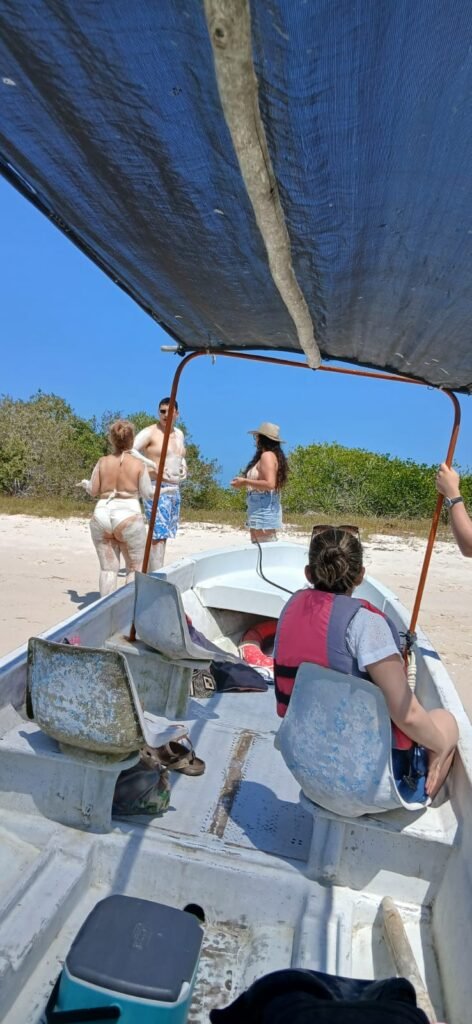
Why the Sun Drying Step Matters
Local guides often recommend letting the mud dry completely under the sun before washing it off.
There is a reason for this.
As the mud dries:
- minerals remain in contact with the skin longer
- salt concentration increases
- the clay tightens slightly as moisture evaporates
This is when most of the exfoliating and mineral interactions occur.
You’ll know it’s ready when the mud begins to crack on your skin.
That’s the classic moment when visitors look like ancient statues and yes, it also makes for a great travel photo.
Local guides often recommend letting the mud dry completely under the sun before washing it off.
There is a reason for this.
As the mud dries:
- minerals remain in contact with the skin longer
- salt concentration increases
- the clay tightens slightly as moisture evaporates
This is when most of the exfoliating and mineral interactions occur.
You’ll know it’s ready when the mud begins to crack on your skin.
That’s the classic moment when visitors look like ancient statues — and yes, it also makes for a great travel photo.
Is the Mayan Mud Bath a Real Medical Treatment?
This is where honesty matters.
The Mayan mud bath is not a medical cure for chronic skin diseases.
While mineral mud therapies have been studied and used in therapeutic settings (known as pelotherapy), a short lagoon bath cannot replace professional dermatological treatments.
However, as a natural cleansing and relaxation experience, it can absolutely benefit the skin by:
- exfoliating dead cells
- providing mineral contact
- improving circulation
- leaving the skin smoother
And perhaps just as important: it’s a unique cultural and natural experience that connects visitors with the lagoon environment.
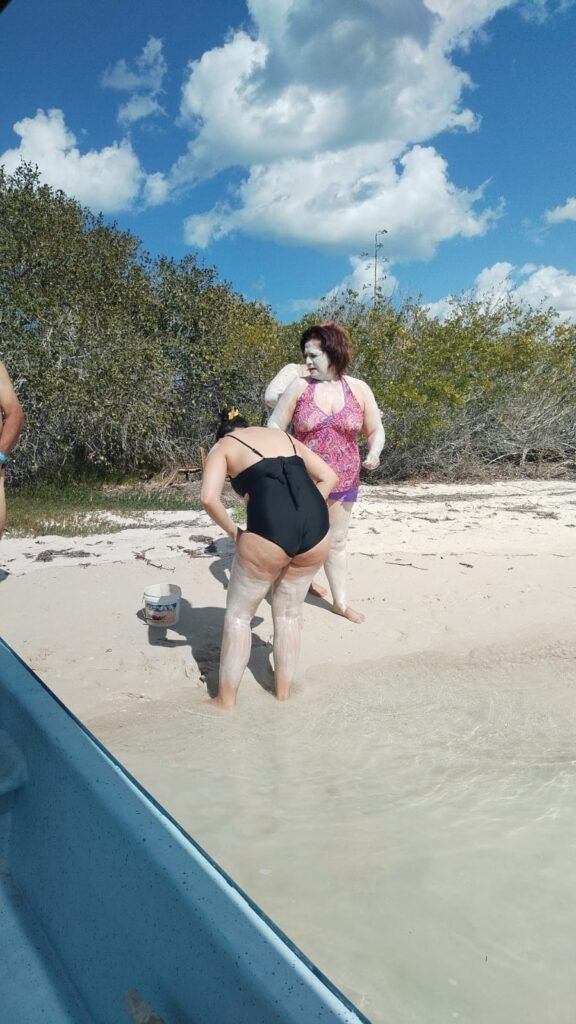
Why the Mayan Mud Bath Exists in Río Lagartos
The famous Mayan mud bath is not a random attraction, it exists because of the unique natural conditions of the Ría Lagartos Biosphere Reserve.
This protected coastal ecosystem is known for its hypersaline lagoons, extensive mangrove forests, and mineral rich sediments formed over thousands of years. As seawater evaporates in the shallow lagoons and salt flats surrounding Río Lagartos, minerals gradually concentrate in the mud at the bottom.
Over time, these sediments accumulate elements like sulfur, magnesium, and potassium, creating the natural clay that visitors experience during the traditional mud bath.
In other words, the Mayan mud bath is not a spa treatment created for tourism, it is a natural phenomenon shaped by the unique environment of the Rio Lagartos Nature.
This is exactly why the experience feels so authentic. While applying the mineral mud to your skin, you are standing in one of Mexico’s most important wildlife reserves, surrounded by flamingos, mangroves, and the quiet beauty of the lagoon.
For many travelers, this moment becomes one of the most memorable parts of visiting Río Lagartos a simple but powerful connection with nature.
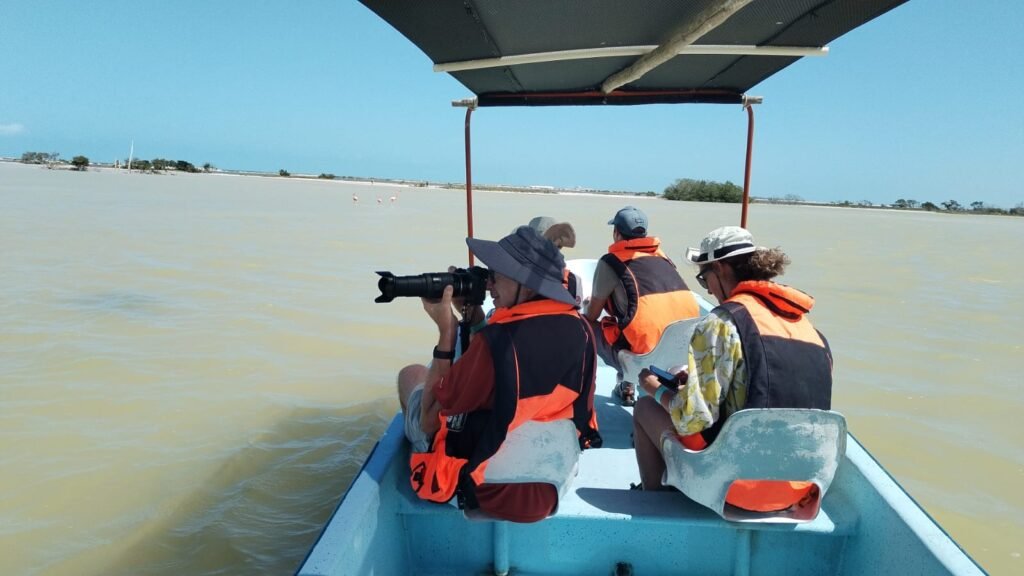
A Natural Experience You Won’t Forget
Few places in the world allow you to experience something so simple and natural.
In the calm waters of Río Lagartos Biosphere Reserve, surrounded by mangroves, wildlife, and salt flats, the Mayan mud bath has become one of the most memorable moments for travelers visiting the region.
It may not be a miracle, but it’s definitely more than just a photo.
Sometimes the best spa treatments are the ones nature has been preparing for centuries.
If you’d like to experience the Mayan mud bath as part of a guided nature adventure, you can explore the full tour details in our complete itinerary.
👉 Learn what the experience includes, the wildlife you’ll see, and how the tour unfolds step by step here:
Scientific Sources and References
Below are reliable scientific and institutional sources that support the information about mineral mud, sulfur dermatology, and natural skin treatments mentioned in this article:
- World Health Organization (WHO). Environmental health and mineral exposure studies.
https://www.who.int - International Society of Medical Hydrology and Climatology. Research on therapeutic mud treatments and pelotherapy.
https://www.ismh-direct.net - National Center for Biotechnology Information (NCBI). Scientific publications on sulfur in dermatology and mineral mud therapy.
https://www.ncbi.nlm.nih.gov - UNESCO – Man and the Biosphere Programme. Information on biosphere reserves and protected ecosystems such as Río Lagartos.
https://www.unesco.org/en/mab - CONANP – Comisión Nacional de Áreas Naturales Protegidas. Official information about the Río Lagartos Biosphere Reserve ecosystem and conservation efforts.
https://www.gob.mx/conanp - PubMed Database – Medical research articles related to dermatology, sulfur treatments, and therapeutic clays.
https://pubmed.ncbi.nlm.nih.gov