
What Makes the Festival of Ánimas in Río Lagartos Unique in Yucatán
The Festival of Ánimas in Río Lagartos isn’t just another Day of the Dead celebration—it’s an experience shaped by water, light, ritual, and community. While many towns in Yucatán honor the dead through Hanal Pixán, Río Lagartos adds a breathtaking twist:
its main ceremony happens on the water.
The Maya Roots Behind Hanal Pixán
Hanal Pixán, “food of the souls,” is the Maya tradition of welcoming the departed back home. Families prepare altars with food, candles, flowers, and photographs, but in Río Lagartos the celebration extends to the ría, where the living accompany the pixanes—the returning souls—through ritual, music, and shared memory.
Where Water Meets Spirit
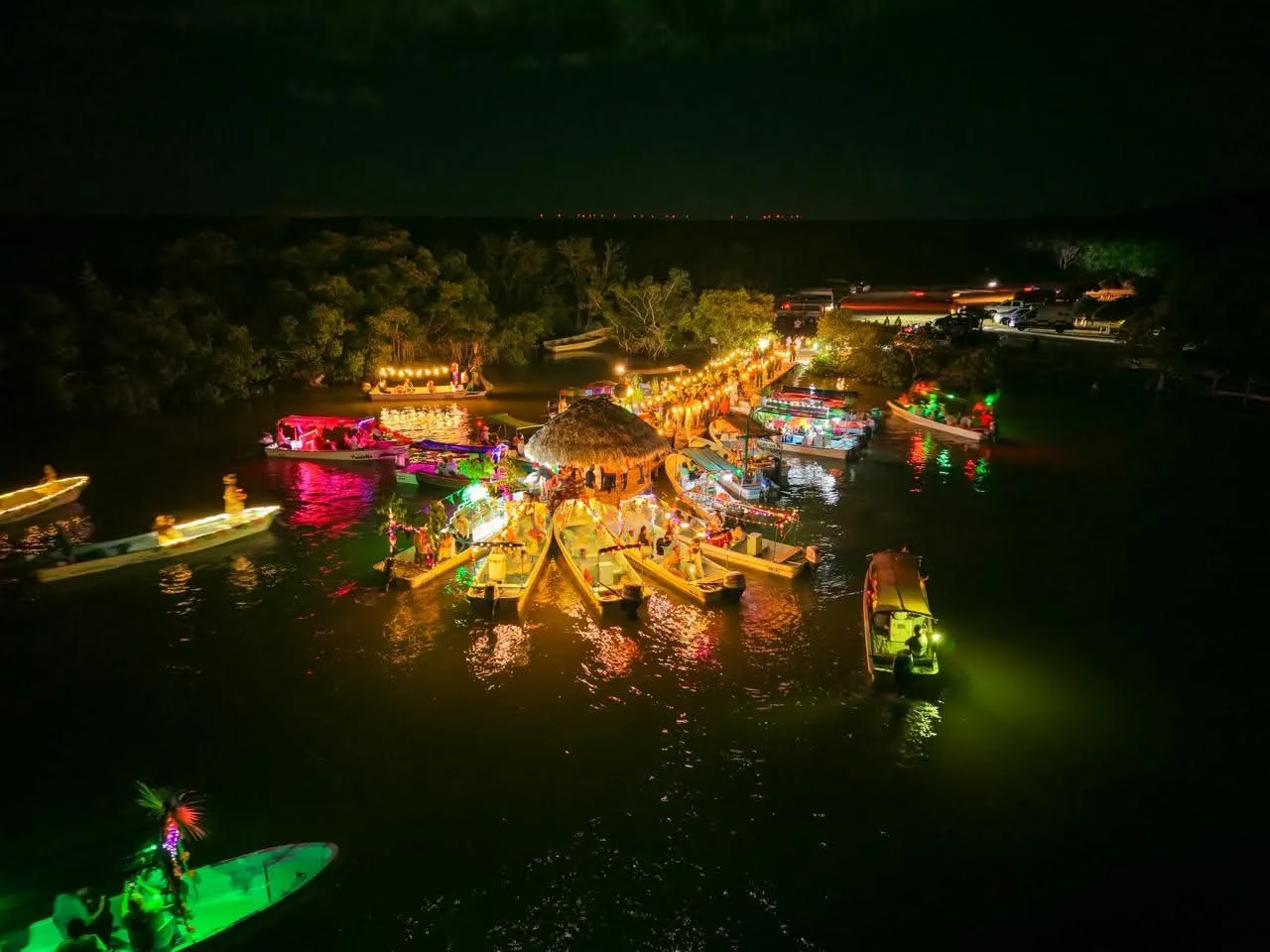
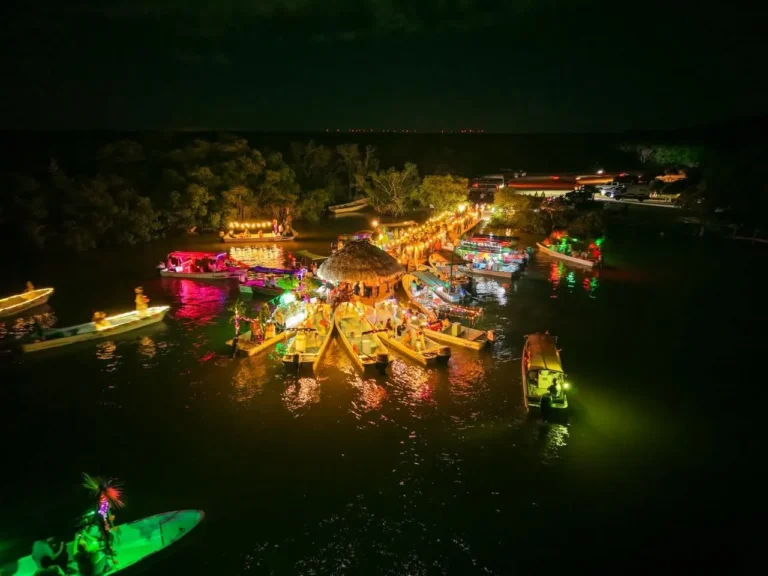
Río Lagartos’ ría becomes the symbolic path the souls travel to visit the living. When dozens of glowing boats begin moving across the water, their reflections turn the night into a shimmering ceremony. It’s spiritual, emotional, and visually unforgettable.
The Festival Atmosphere: Color, Rituals, and Community Energy
Before you even step onto a boat, the entire town radiates excitement. From the Chiquilá dock to the malecón, the air feels charged full of music, color, and people who gather from across the region and beyond.
How the Town Comes Alive
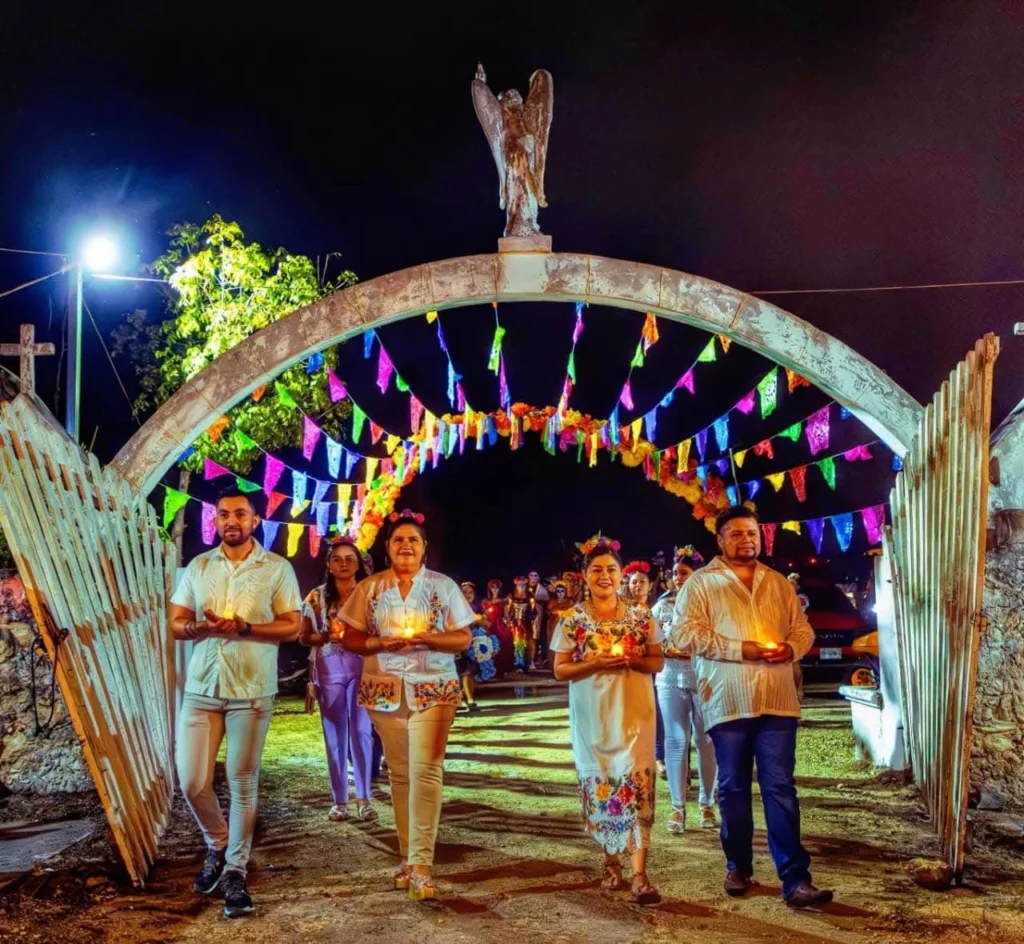
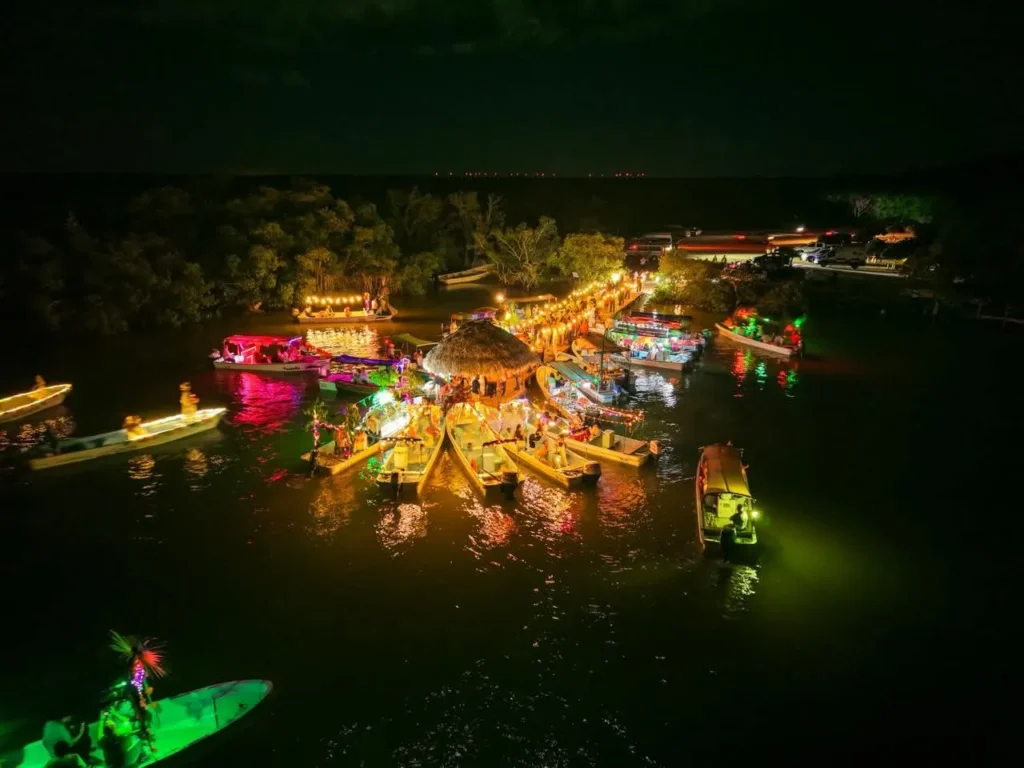
When I arrived at the Chiquilá dock, the transformation was immediate. Decorations, lights, arches of flowers, and traditional outfits created an atmosphere you could feel in your chest. It wasn’t just a festival it felt like the whole town was preparing to welcome someone important.
Maya Rituals and Live Jaranera Music
As we prepared to board, Maya performers were already dancing, chanting in Maya, and offering blessings for the journey. At the same time, a jaranera orchestra launched into music that accompanied us through the entire boat ride. That blend of drums, chants, and jaranas set the tone for the night festive yet spiritual.
A Celebration Shared by Everyone
Locals, tourists, families, and even state authorities joined the event. The governor of Yucatán and his team were part of the procession, giving the celebration a strong communal character. You feel it immediately: no one is just a spectator here—everyone participates.
The Paseo de Pixanes: A Nighttime Journey Over the Ría
This is the moment everyone waits for: the boats, the lights, the water, the music—all merging into one glowing river of tradition.
The Boats: Floating Altars of Light
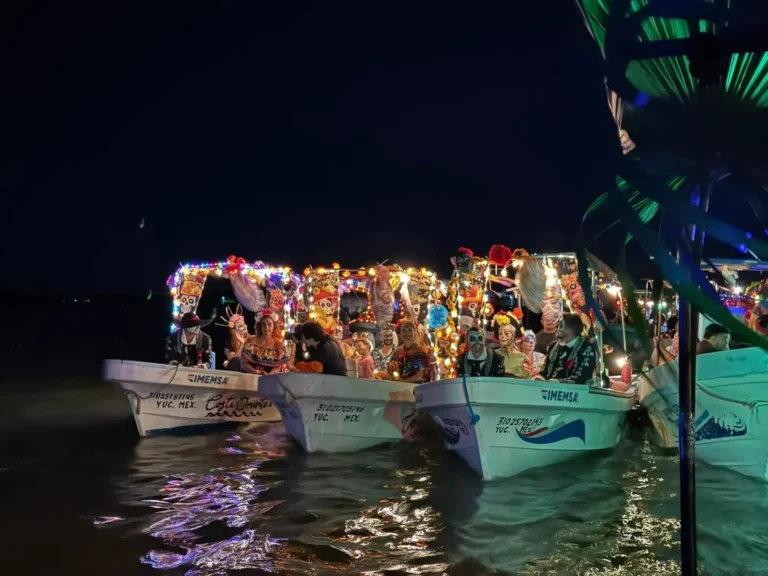
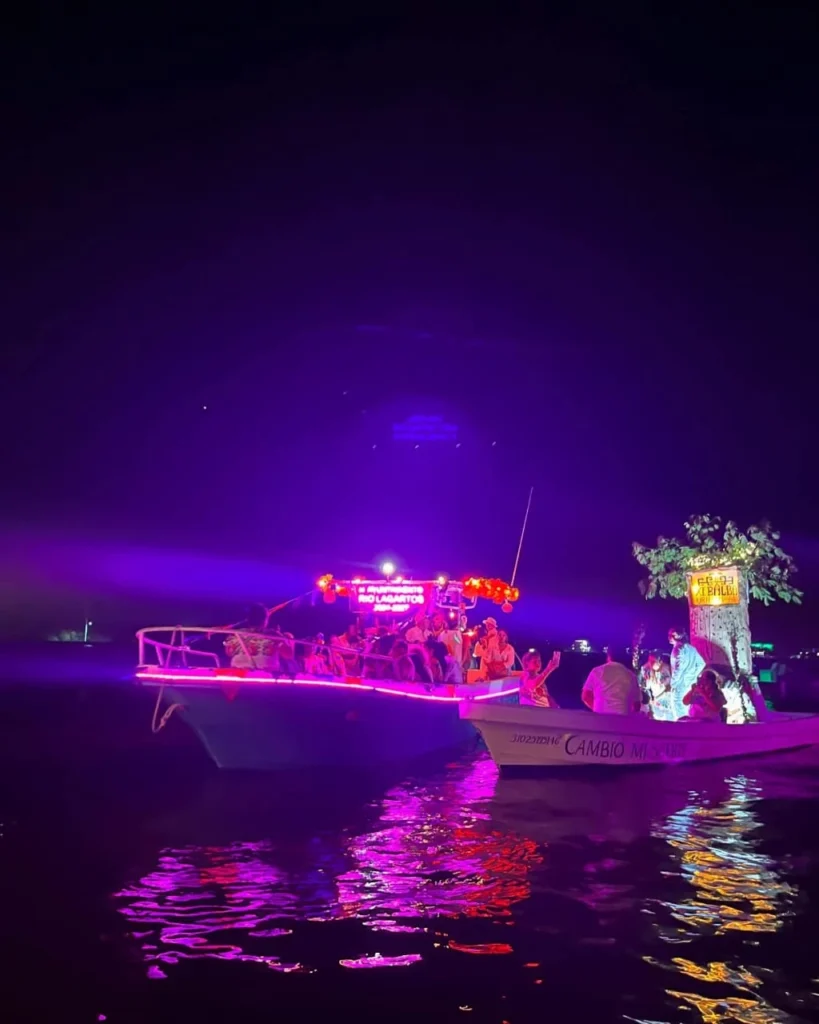
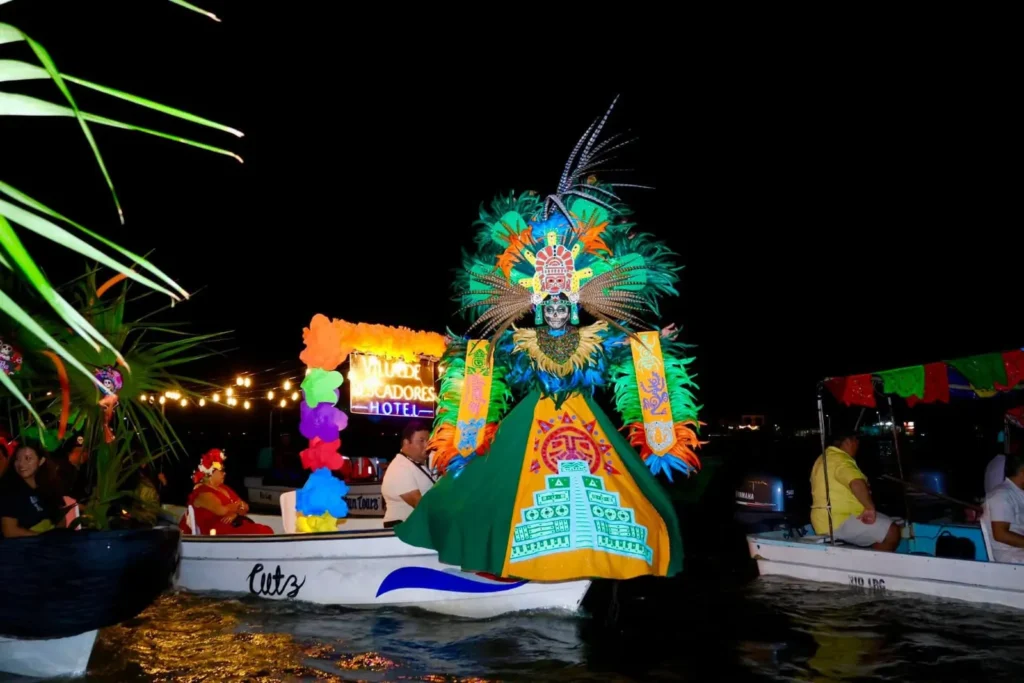
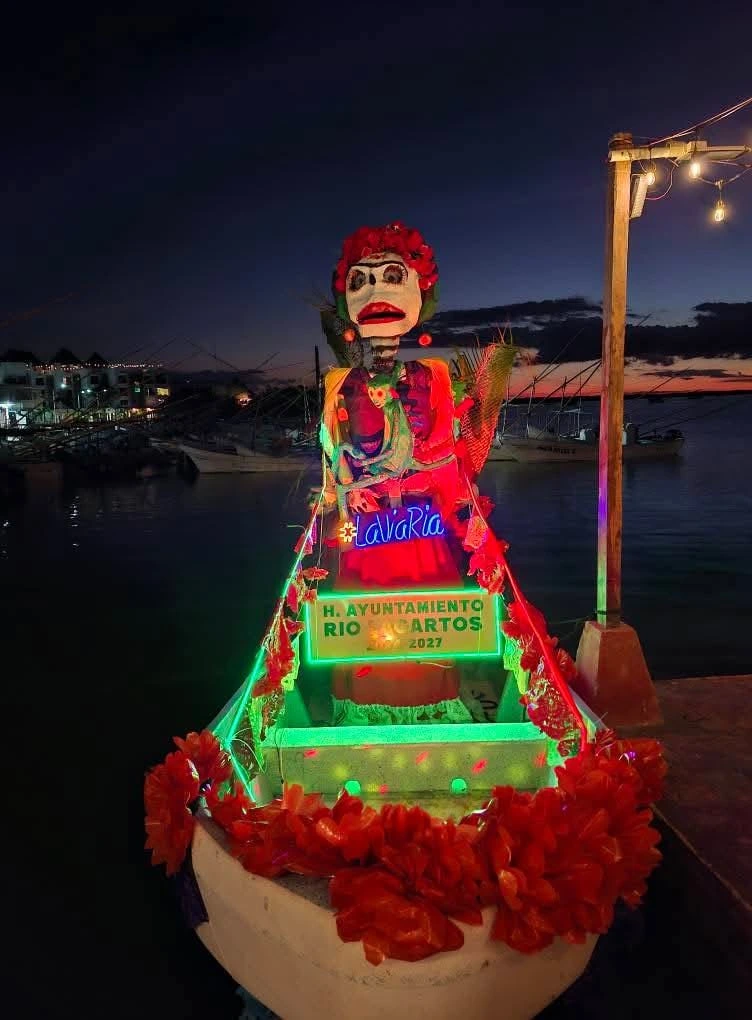
Many boats are decorated with multicolored lights, cempasúchil flowers, small altars, and symbolic elements inspired by Maya temples and deities.
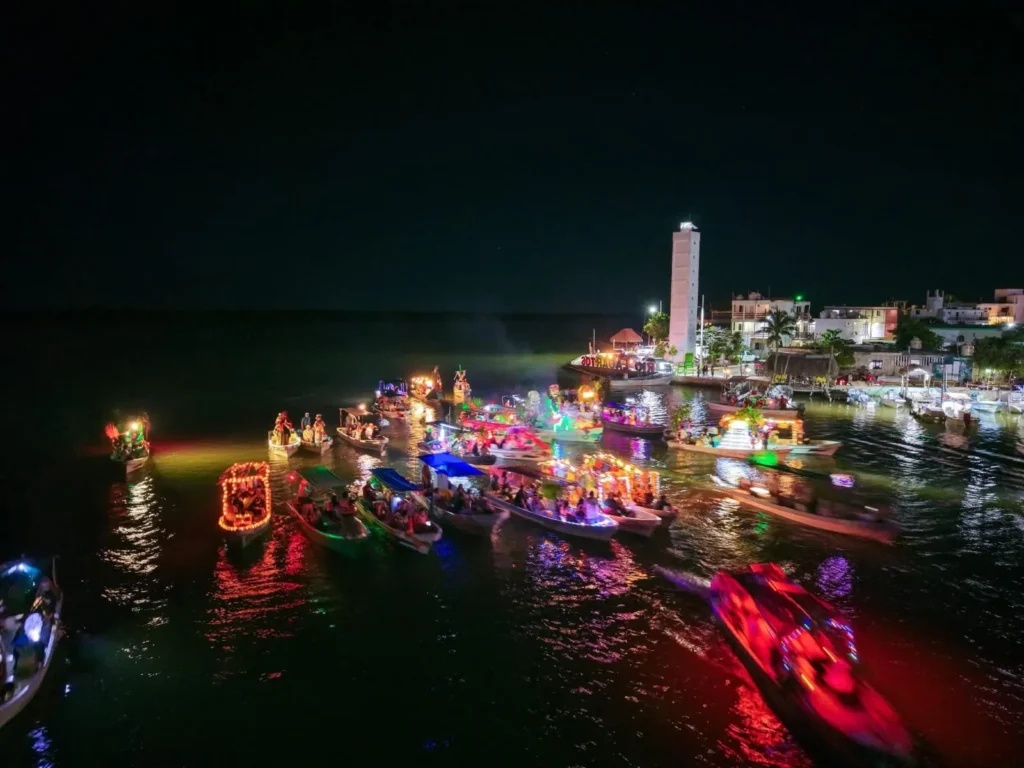
One of the first things that struck me was seeing boats fully lit in blues, reds, greens, and gold, their reflections rippling across the water. Some passengers had painted skull faces or wore traditional dresses, turning each boat into a living, floating tribute.
From Chiquilá Dock to the T Pier
The procession starts at the Chiquilá dock, moving slowly and gracefully across the ría. Throughout the journey, we heard Maya chants, ritualistic sounds, and the steady rhythm of the jaranera orchestra behind us.
Moments That Stay With You
At times the water looked like liquid light, illuminated by dozens of boats moving in harmony. We passed vessels decorated with temples, ancestral symbols, and colorful floral arches. People waved, laughed, prayed, and celebrated together. It felt magical, like stepping into a story.
What It Feels Like to Be There
Honestly? The moment you step onto the boat, the energy changes.
You feel the mix of joy, nostalgia, spirituality, and a deep sense of tradition. It’s nothing like watching photos or videos online. Being there surrounded by music, water, and glowing colors—makes the whole experience unforgettable.
The Procession and Cultural Event at Parque Juárez
Once the boats reach the T Pier, another part of the celebration begins
Contests and Community Performances
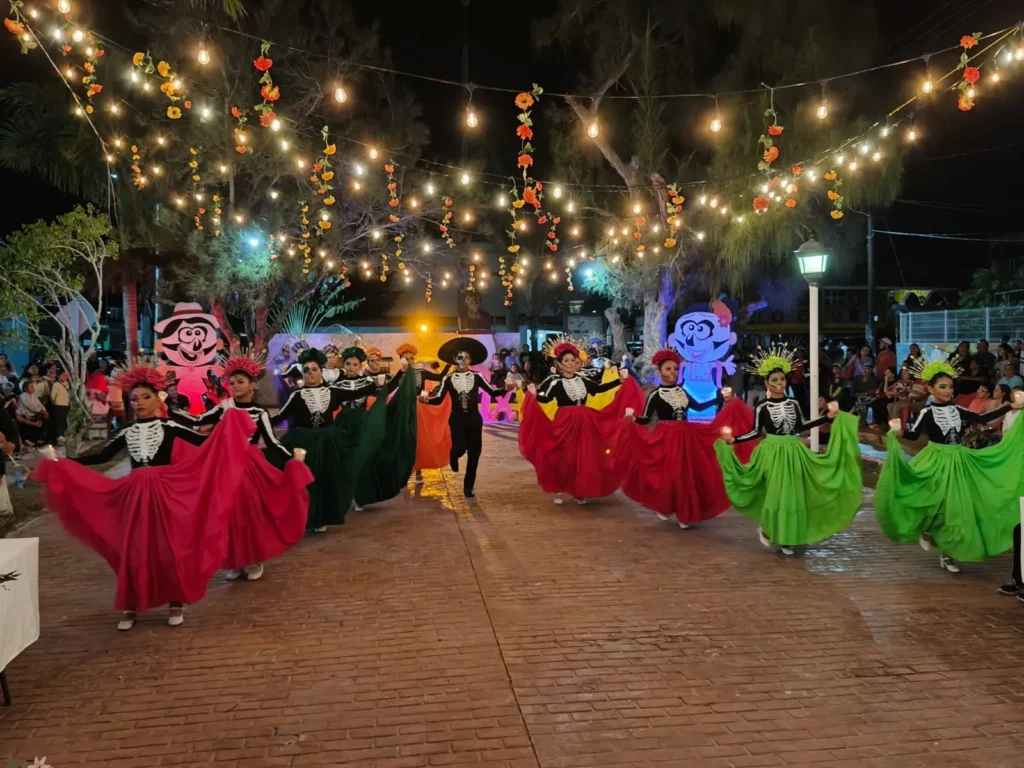
The park became a stage for:
- traditional Maya dances,
- children’s and youth ballet groups dressed as catrinas and calacas,
- a costume contest for kids and adults,
- and the famous boat-decorating contest.
Each performance felt like a gift from the community to its visitors.
A Stunning Altar and a Touching Tribute
At the center of the park stood a multi-tiered altar glowing with candles, cempasúchil, fruits, bread, jícaras, and portraits of the departed.
One of the most emotional moments was a tribute to the person who founded the local cemetery—an intimate reminder of why this festival exists: to remember.
How to Experience the Festival of Ánimas Like a Local
Tips, Logistics, and What to Bring
- Arrive early at the Chiquilá dock.
- Wear comfortable clothing (nights are cool but humid).
- Book your boat spot in advance—spaces fill up fast.
- Bring a power bank; you’ll take dozens of photos.
- Follow staff instructions during boarding and docking.
How to Reserve a Spot on a Decorated Boat
Local hotels, restaurants, and tourist cooperatives usually manage reservations. Some offer packages that include the Paseo de Pixanes.
Would you like to experience this festival next year? Make your visit unforgettable by reading our guide with the [10 Essential Tips for Traveling to Río Lagartos].
Food You Must Try During These Days
You’ll find delicious seasonal dishes across town, including:
- mukbilpollo (a must!)
- atole
- candied papaya and pumpkin
- Yucatecan-style pan de muerto
Eating local food is a huge part of the Hanal Pixán experience.
Frequently Asked Questions (FAQ)
When does the Festival of Ánimas take place, and where does it start?
Usually from October 30 to November 2.
The boat procession begins at the Chiquilá dock.
Is it family-friendly?
Yes. The event is safe, organized, and filled with families and children.
What else is there besides the boat procession?
The walking procession, cultural performances, traditional dances, mariachis, costume and boat contests, and an altar exhibition.
How long does the boat ride last?
Around 40–60 minutes, followed by the procession to the park and the cultural program.
Itinerario tour por Río Lagartos: qué ver, qué incluye y cómo reservar
🌙 Festival of Ánimas in Río Lagartos: Experiencing the Camino de Ánimas and the Paseo de Pixanes